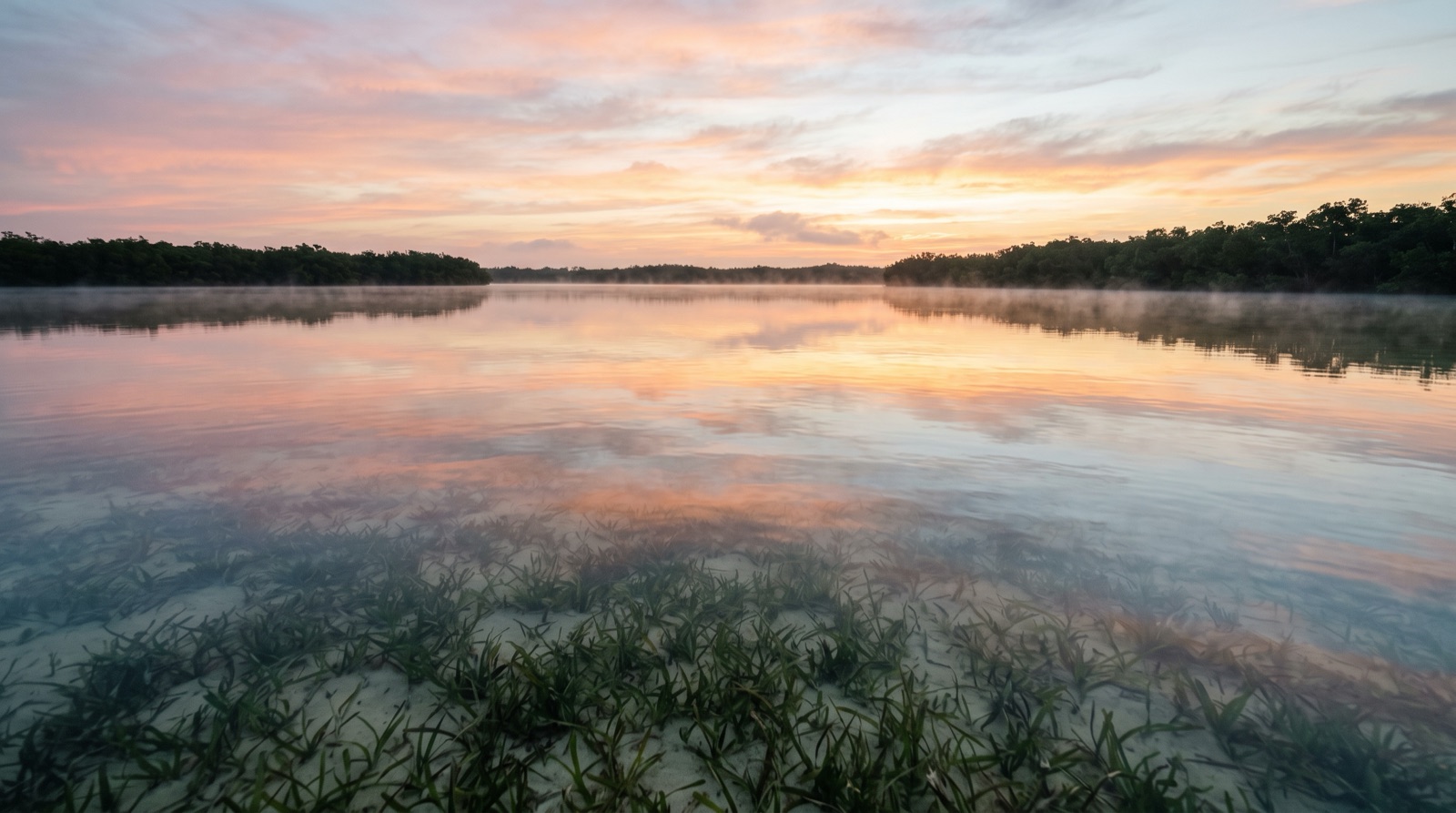
A fly angler in Denver has wanted to catch a redfish on the flats for years. He’s got a week in October, a new eight-weight, and three guide names someone dropped in a Facebook group. He’s never fished your water and never met you. He’ll pick a guide off his phone, weeks out, on a handful of hero shots and whoever answers his questions.
That’s a flats client — nothing like the vacationer who books a party boat the night before. A flats or inshore trip is a planned, reputation-driven, one-on-one hunt on the water, chosen on entirely different signals. If you pole a skiff for redfish, snook, tarpon, or bones, your marketing has to sell the sight-fish, not the boat ride.
Here’s how to market a flats or inshore guide service. (If you run offshore or party-boat charters, that’s a different game — we covered it in marketing for fishing charters.)
A flats trip is booked on reputation, not proximity
A charter gets booked by whoever’s easiest to reach in the moment. A flats trip gets booked on who’s the real deal. Your client is often traveling to fish — flying in for a shot at a species he can’t catch at home — so he plans ahead, compares hard, and chooses on skill, reports, and reputation.
That flips your whole approach. Your reach is national, not just “near me.” Your proof does the selling. And your fishing reports and social feed are what keep you top of mind between the day he starts dreaming about it and the day he books. Why social media matters is doubly true for a sight-fishing guide — a steady feed of real eats is your résumé.
Win the species-and-place searches
Traveling anglers search precisely: “Islamorada tarpon guide,” “Louisiana marsh redfish fly,” “Tampa Bay snook guide,” “Lower Laguna Madre flats fishing.” Build a page for each species and water you fish, with the season, what a day looks like, and the rate. Those pages catch the exact phrase an angler types while planning his trip.
Local search still matters — a visiting angler searches from his destination, so a dialed-in profile puts you on the map when he lands. The fundamentals are in local SEO for guides.
Sell the sight-fish: media and reviews carry a light-tackle guide
You’re not selling a cooler of fish. You’re selling the shot — the tail in the grass, the eat, the jump. That’s a visual product, so your media has to show it:
- The eat and the poling. A clip of a redfish crushing a fly or a tarpon rolling boatside sells a trip a stock photo never will. This is exactly why high-quality media matters for a flats guide more than almost anyone.
- Recent reviews. A stranger is stepping onto your skiff for a full day, one-on-one — that’s high trust. Stack fresh reviews that book trips and ask every angler at the ramp.
- Honest expectations. A permit day is not a numbers day. Set the shot count and the difficulty straight up front — the angler who knows what he’s signing up for leaves happy and rebooks.
A flats client books the guide who looks like the real deal and answers like a pro. Show the eat, stack the reviews, and pick up fast — that’s the whole game.
Book around tides, wind, and seasons
Flats fishing lives and dies by conditions. Trips get scrubbed by wind, and the good windows move with the tide and the calendar. Two things keep that from costing you:
- A clear weather policy and a deposit. Spell out what happens when it blows out and how a reschedule works. Anglers book faster when the risk is on the table, not hidden.
- A season calendar. Redfish year-round, the tarpon migration, permit, snook closures — a page that shows what’s running when books the trip-of-a-lifetime months ahead, while the angler is still planning his travel.
The leak: you’re poling the flats all day with no phone
Here’s the part that quietly costs flats guides the most trips. When you’re working, you’re standing on a platform eight hours with your phone in the dry box. The destination angler emailing three guides to plan his October trip? He books whoever answers first — and that’s never going to be you at 11 a.m. on the water.
Your best fishing days are your highest-inquiry days, and they’re the exact hours you cannot answer. That’s the leak.
The Spotter plugs it. It’s a 24/7 booking concierge on your site that picks up the second an angler reaches out — answers species, seasons, rates, and whether you’ve got his dates — then captures his name, party, and trip and drops the lead to your phone. The moment you’re off the water, the booking’s waiting to confirm. It covers every hour you’re poling, sleeping, or rigging leaders. One saved trip pays for months of it — and we broke down every way this happens in the missed-call problem.
Put it together
Marketing a flats or inshore guide service matches how these trips actually get booked — planned, from away, on reputation and proof:
- Sell the reputation — national reach, a steady feed of real eats, reports that keep you top of mind.
- Win the species-and-place searches with a page for each fish and water you run.
- Show the sight-fish — the eat, the poling, honest shot counts, fresh reviews.
- Book around conditions — clear weather policy, deposit, a season calendar.
- Answer while you’re on the water — a front desk in the gap so a traveling angler never books the guy in the next skiff instead.
Do that and you become the guide the fly angler in Denver books before he ever gets on the plane.
Want to see where your flats bookings are slipping? Book a quick call and we’ll walk your funnel with you — or message the front desk on this page and watch it field a trip question the way it would for your next angler.